Types of Tents Used in Himalayan Camping: A Complete Beginner’s Guide
Trek Diaries

Types of Tents Used in Himalayan Camping: A Complete Beginner’s Guide

Essential Guide To Himalayan Camping Tents

Camping under stars in the Himalayas is always beautiful. The cold weather and the standing Himalayas makes it special. Whether you are trekking in summer or winter, tents are very important. If you are doing any high-altitude treks like Bali Pass Trek then camping is the only option as there is no homestay or teahouse. Camping in the Himalayan is not like normal camping. The weather conditions can change anytime and nights are always cold even in the mid summer. This guide will help you to find the best type of tent you need for your trek.

types of tents in Himalayan Trekking

Why is choosing the right tent necessary for every Himalayan trek?

Camping is not only about sleeping in the tent. You need the right type of tent for your trek. Your tent will protect you from a lot of things. While trekking in the Himalayas, you have to face things like:

  • Sudden weather changes
  • Strong winds
  • Snowfall
  • Rain
  • Insects

Every type of tent is designed for different purposes. Some work well with strong winds while some are more comfortable.

Types of Tents For Camping In Himalayas

Camping in Himalayan regions of Uttarakhand and Himachal Pradesh is beautiful as you will be surrounded by valleys and snow-capped mountains. You need a good tent to make your camping more reliable and comfortable.

Dome Tents | Go-To tents for Himalayan treks

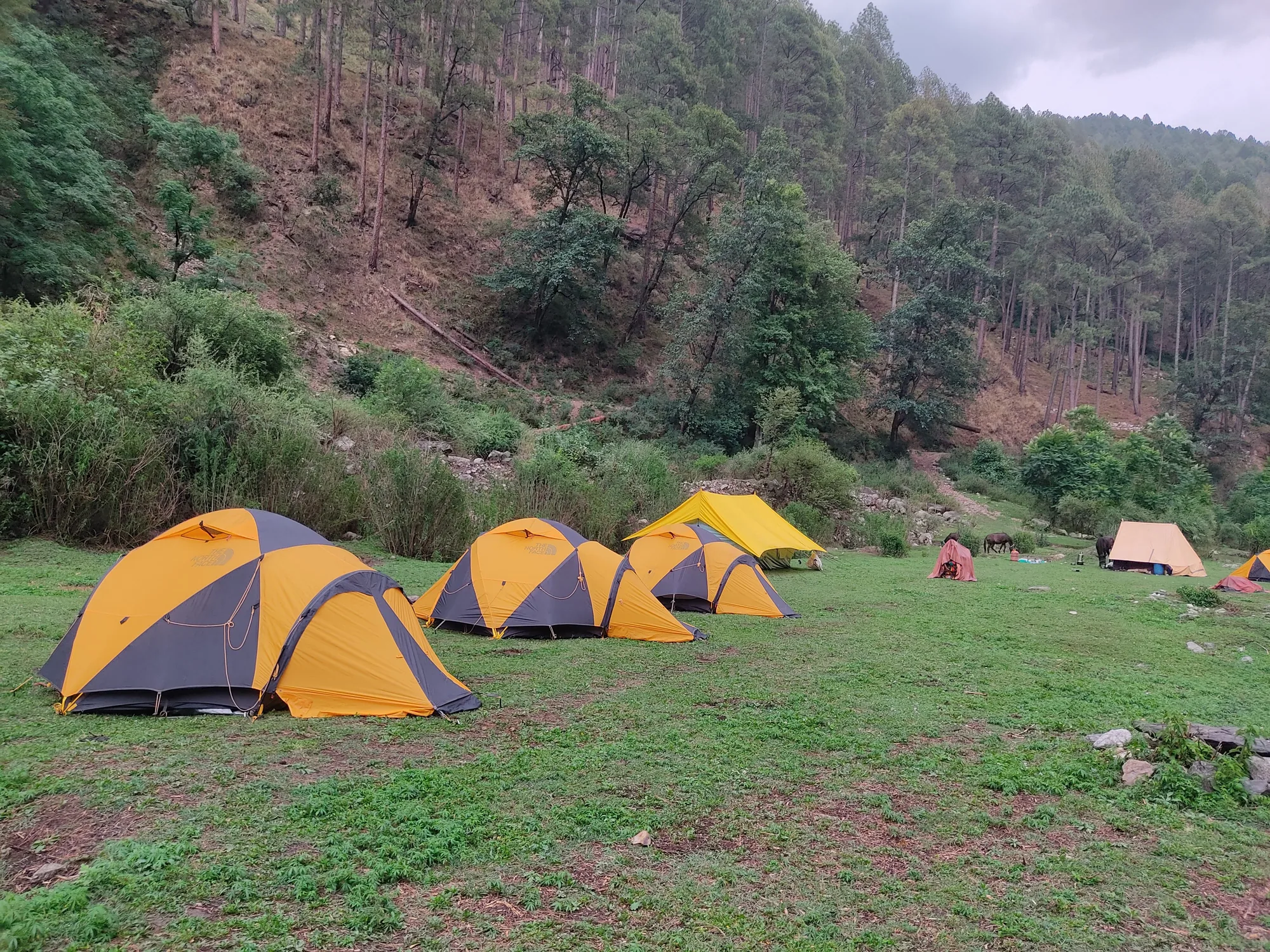
Dome tents are beginner-friendly and highly-prefered tents in Himalayan trekking. You can easily recognize dome tents from their shape. Pitching a dome tent is very easy. You can use these kinds of tents for Har Ki Dun and similar treks. 

Why we use dome tent:

  • Tent pitching is easy
  • Comfortable for double / triple sharing
  • Lightweight and easy to carry
  • Works well in moderate weather conditions

Dome Tents are best for:

  • Easy to moderate treks
  • Beginners
  • Stable to moderate weather conditions

A-Shaped Tents | Simple and traditional tents 

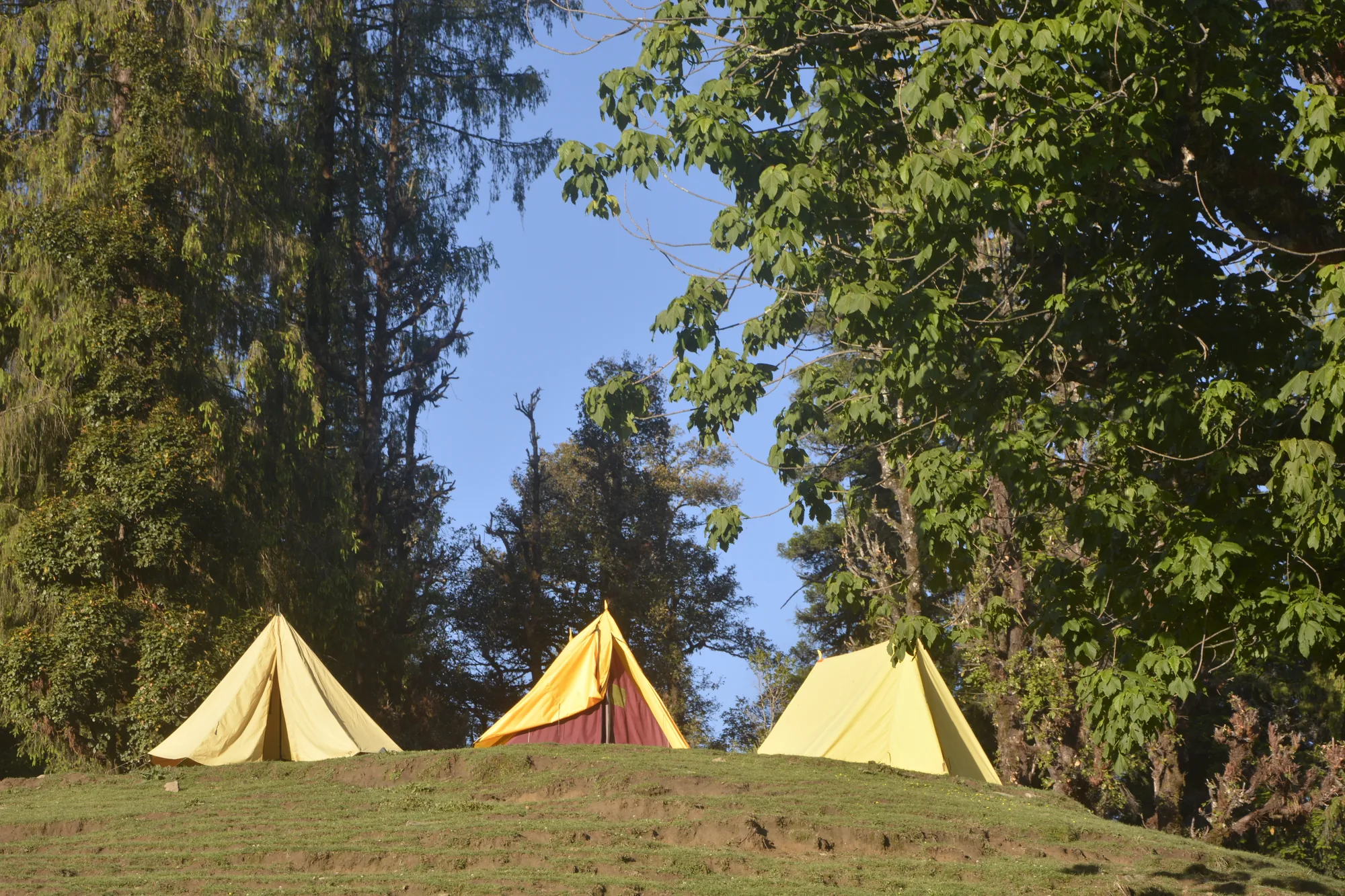
a shaped tent

A-shaped tents are ridge tents and are the traditional types of tents. People have been using A-shaped tents for centuries. These tents are still common in easy treks with moderate altitude like Dayara Bugyal trek. These treks are simple and quick to set up.

Why we use A-Shaped tents:

  • Have simple triangular (A-shaped) structure
  • Need fewer poles and equipments 
  • Good ventilation
  • Easy to pitch

A-Shaped tents are best for:

  • Camping in lower altitude region
  • Short-duration camping
  • Camping in summer with stable weather conditions

Tunnel Tents | Preferred for windy campsites

Tunnel tents are somewhat similar to the dome tent. The poles on tunnel tents run outside the tent and require proper anchoring. These tents are more stable in windy camps. The tunnel tents are big and mostly used for dining or briefing. 

Why we use Tunnel tents:

  • Big wind resistance
  • Usable space for gear
  • Easy group setup

Tunnel tents are best for:

  • Open valleys
  • Windy campsite
  • Dining and briefing

Alpine Tents | Best for winter treks

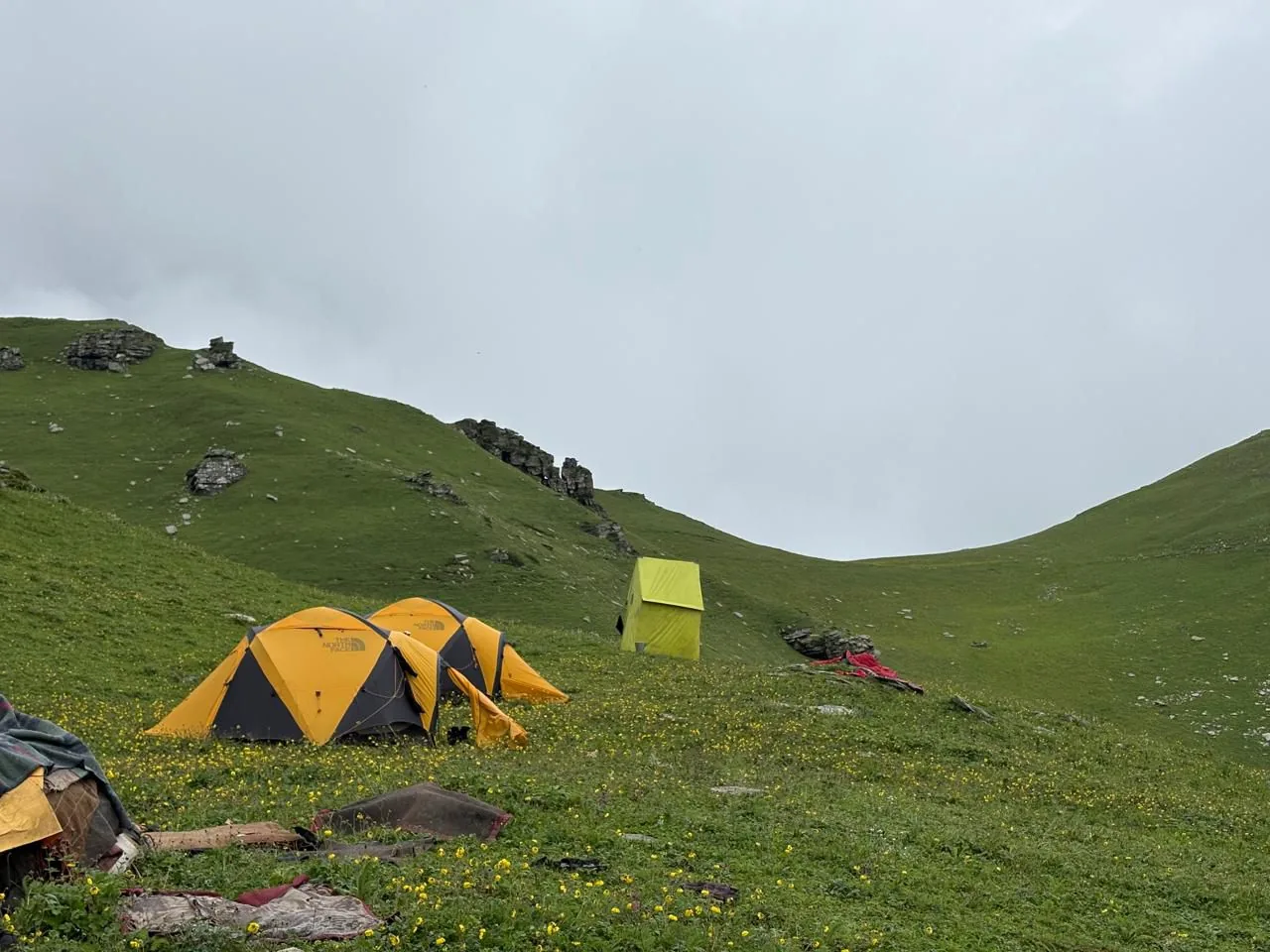
Alpine tents are best for winter treks. These tents are used in extreme cold and harsh conditions. Alpine tents are always the most reliable tents for winter trekking. These tents are specially designed for high-altitude treks where you have to pitch tents in snow. Alpine tents are mainly used for camping in Uttarakhand, Himachal and other high-altitude regions like Kashmir Great Lakes (KGL) and Gaumukh Tapovan Trek.

alpine tents

Why we use Alpine tents:

  • Good snow load capability
  • Excellent wind resistance
  • Waterproof and good durability
  • Good insulation

Alpine tents are best for:

  • Snow and winter expeditions
  • High-altitude treks
  • Exposed ridgelines treks
  • Very unpredictable weather

Geodesic Tents | Reliable high-altitude treks

Geodesic tents are very similar to dome tents but are bigger in size. These tents are good for high-altitude trekking. These tents have more poles and work well in windy weather. The Geodesic tents are reliable but are on the pricey side.

Why we use Geodesic tents:

  • Good wind resistance
  • More capacity
  • Can handles heavy snow

Geodesic tents are best for:

  • Winter/snow trekking
  • High-altitude trekking
  • Exposed ridgeline trekking

Pop-up Tents | Not for Himalayan Treks

The pop-up tents are easy to set up. These are spring-loaded tents and they come in shape when released. The pop-up tents are light-weighed and easy to carry. But pop-up tents are not for Himalayan trek as they can’t handle the cold and extreme weather conditions.

Why we use Pop-up tents:

  • Easy to carry
  • Easy to set up

Pop-up tents are best for:

  • Small day hikes 
  • Small summer treks in lower-altitude regions (Not in the Himalayas)

What things to look at while choosing a tent in Himalayan region??

There are many things to consider while choosing a tent for your trek to the Himalayas. A good tent means comfortable camping. If you are trekking in the Himalayas and want to have the best experience then always find the right-fit tent.

Weather resistance

Weather in the Himalayas can change any minute. If you are planning to do treks like Buran Ghati trek where the temperature can drop to sub-zero then you need a tent that can protect you from snow, rain, and wind. Your tent should have good quality water-resistance if you are doing monsoon treks like Hampta Pass trek.  

Insulation and warmth
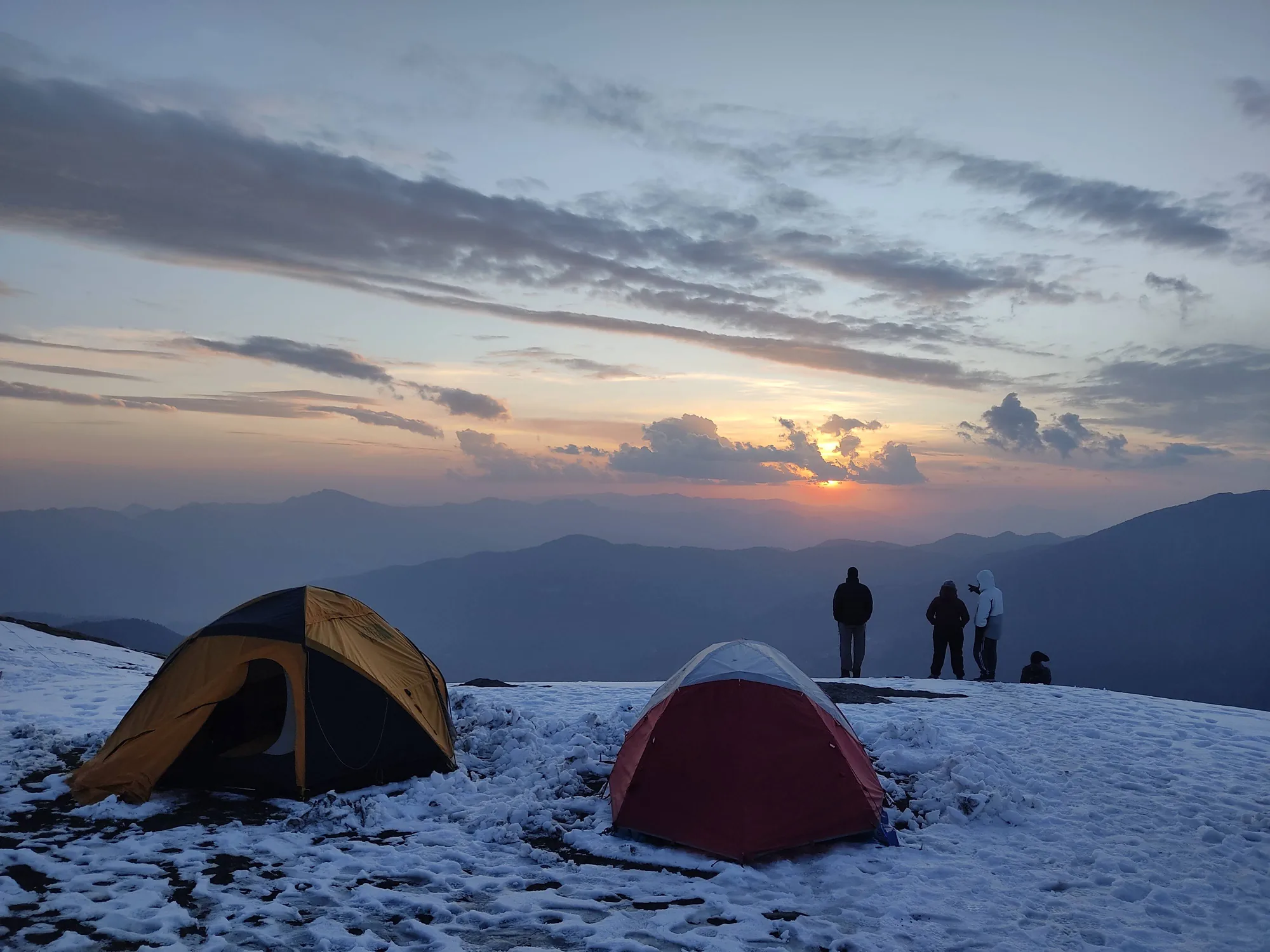
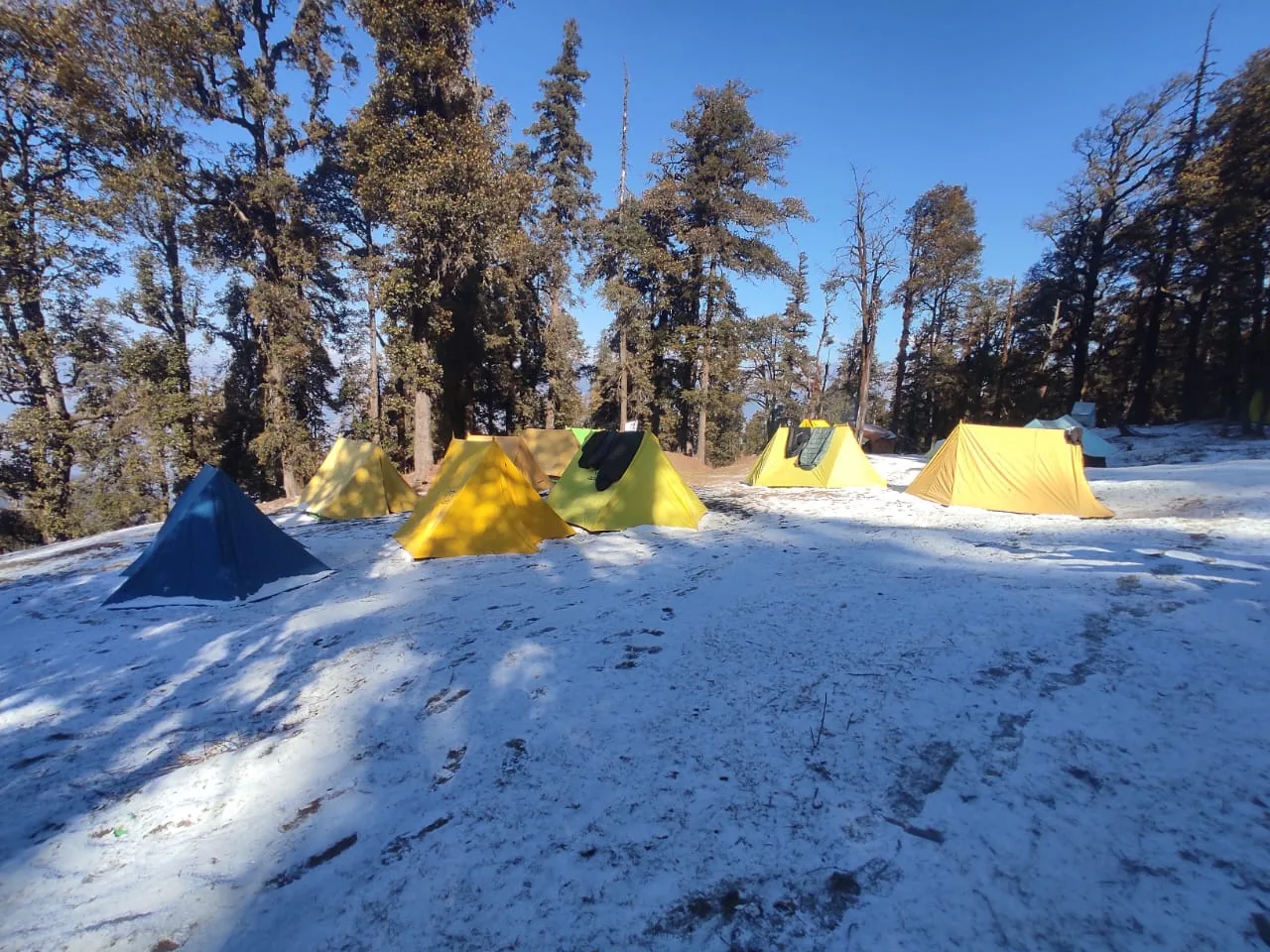
camping in snow

Nights are always cold in the Himalayas. Whether you are camping in summer or winter, the temperature always remains low. Camping in summer means days will be warmer but nights will be cold. Even in peak summer, the temperature can drop to sub-zero temperature in treks like Bali Pass Trek. Your tent will retain body heat and block cold winds. Some Himalayan treks also provide double-layer protection.

Weight and portability

Weight matters a lot in hiking. If you are doing a Himalayan trek then every kilogram can make the trek more difficult. Lightweight tents are easy to carry but have less durability. Meanwhile, heavy tents are more durable and function well in extreme conditions but are difficult to transport.   

Tent capacity

You should choose the type of tent depending on the number of people. If you are trekking solo or with a friend or partner then 2-person tents are best. If you want more comfort then a 3-person tent is better. There are also bigger tents that can be used as kitchen tents or dining tents.

Pricing

The cost depends on the type of tent. It varies in stability, seasonal, capacity, etc. For easy and small treks, you can go for cheap options. But if you are doing a high-altitude trek then you need a good tent like an alpine tent of a good company like The North Face that can protect you from snow, rain, and cold. These tents are pricey but comfortable.
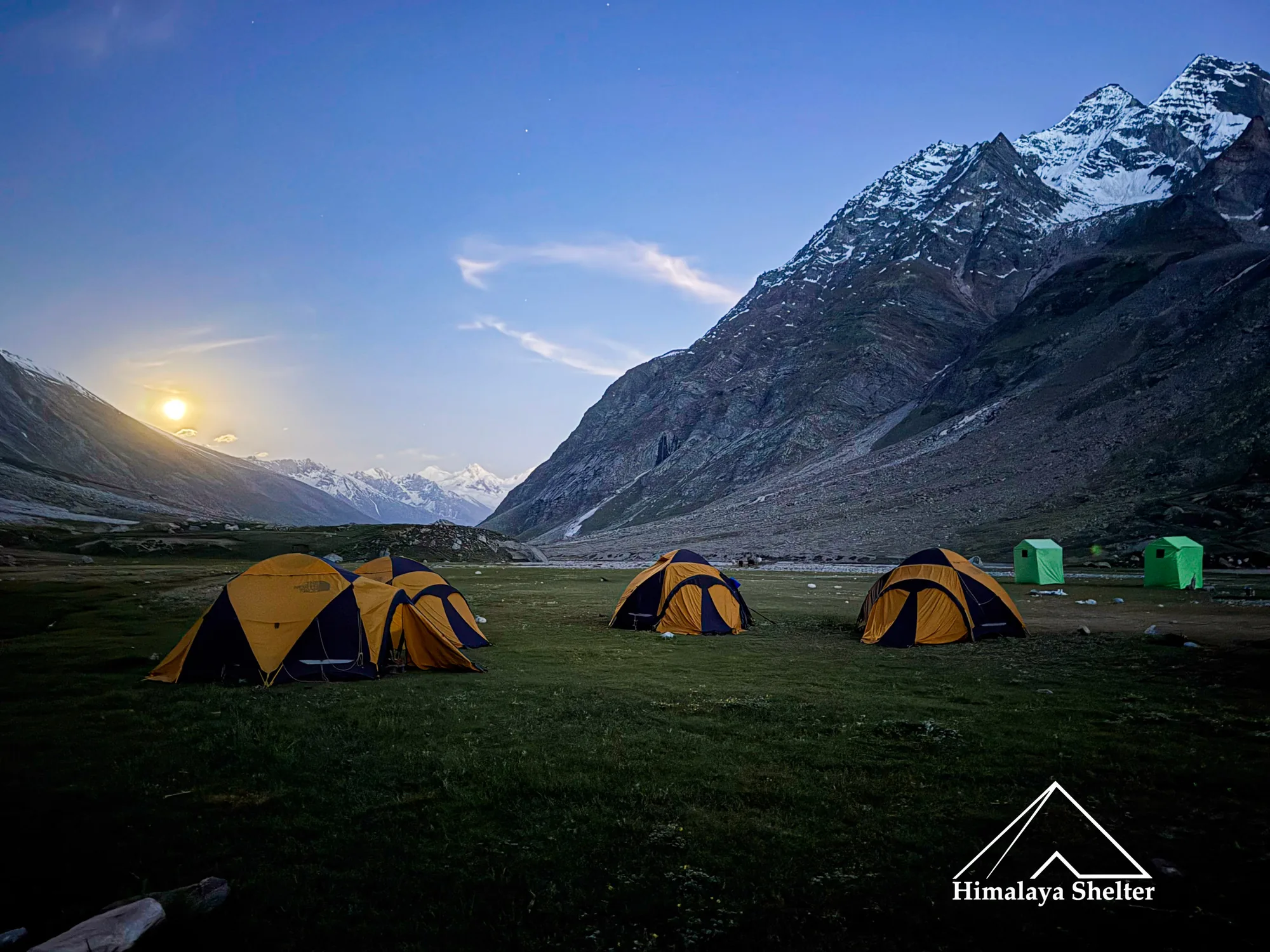
good quality tents

The Himalaya Shelter team functions with different types of tents. We organize the trek with full planning and on-ground experience. Our team has a good understanding about the terrain and weather conditions. We don’t go for a fit-for-all approach. Our team uses different tents for different terrains and seasons. From A-shaped tents to alpine tents for high-altitude treks, our team uses different types depending on the requirements.

We also offer customized trekking services. We create tailored itineraries that work as you need. Your dates, your selected meals to your preferred stays; we provide all possible facilities. Our company can offer all kinds of Himalayan trek from simple day hikes to high-altitude expeditions.

Himalaya Shelter also runs the Great Himalayan Trails (GHT). This trek starts from one end of the country to another. The GHT passes through valleys, forests, mountain passes, and glaciers. There is no permanent itinerary for this trek as the trek is long and has different routes. The trek is hundreds of kilometers long and can take a few weeks to a few months. The Great Himalayan Trail from Himalaya Shelter is for trekkers who want to fully immerse themselves in the raw beauty of the Himalayas.